Best Washing Machines for Most Homes
As an Amazon Associate, I earn from qualifying purchases. Some links may earn us a commission at no extra cost to you.
A useful washing machine should fit the available space, handle the household’s typical loads, and provide controls that people will actually use. Spin performance matters because a higher spin setting can leave less moisture in clothing and reduce subsequent drying time, but it should be considered alongside capacity, cleaning action, efficiency, cycle selection, and maintenance requirements.
The six machines below cover mainstream front-load efficiency, odor-control features, smart top-load convenience, traditional agitator washing, a balanced high-efficiency top-loader, and portable laundry for apartments or homes without conventional hookups.
Top Picks
1. Kenmore 4.5 cu. ft. Front-Load Washer — Best Overall for Most Homes
The Kenmore combines a useful 4.5-cubic-foot capacity with Steam Treat, Accela Wash, a stainless-steel basket, and ENERGY STAR certification. Its front-loading design provides the efficiency and moisture-extraction advantages many households want, while the steam and accelerated-cycle options add flexibility for stains and time-sensitive loads. As with any front-loader, the door seal, dispenser, and wash basket require routine care to limit detergent residue and musty odors.
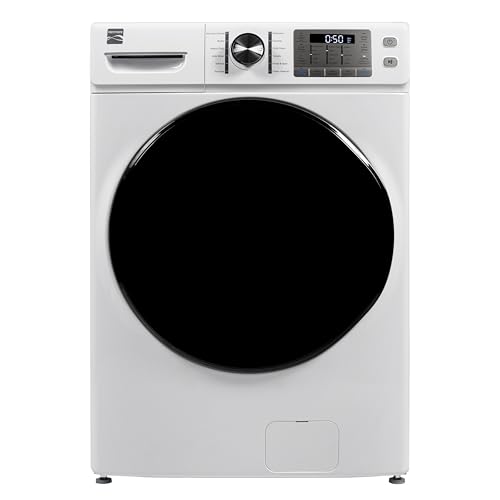
- More Laundry, Less Time: Our high-efficiency front load washer features Express Wash to clean small...
- Tackle Tough Stains: Use the Steam Treat option to remove everyday stains with the strong cleaning...
- Wash Your Way: Features 12 wash cycles to custom wash your loads including Kids Wear, Whites...

Pros
- 4.5-cubic-foot capacity suits routine family laundry
- Steam Treat option targets common stains
- Accela Wash shortens compatible wash cycles
- ENERGY STAR-certified design supports efficient operation
Cons
- Requires regular gasket and drum maintenance
- Front door needs adequate opening clearance
Who should buy it: Households seeking a balanced front-loader with steam treatment, useful capacity, and quicker-cycle flexibility.
2. GE GFW550SSNWW — Best for Front-Load Odor Control
The GE GFW550SSNWW is a 4.8-cubic-foot smart front-loader with the UltraFresh Vent System with OdorBlock and a Sanitize with Oxi cycle. The venting system is designed to help manage moisture after washing, addressing one of the most common ownership concerns associated with front-loading machines. It also offers a short cycle for lightly soiled laundry, but its full-depth cabinet and front-opening door require careful measurement before installation.

- Large 4.8 Cu. Ft. Capacity : Wash more in fewer loads—perfect for families and busy households...
- UltraFresh Vent System with OdorBlock: Helps eliminate excess moisture after each wash cycle...
- Built-In WiFi with SmartHQ App Integration: Remotely control your washer from your phone—start...
Pros
- 4.8-cubic-foot capacity accommodates substantial mixed loads
- UltraFresh Vent System helps manage residual moisture
- Sanitize with Oxi adds a specialized cleaning option
- Smart functionality supports remote monitoring and notifications
Cons
- Deep cabinet may not fit shallow laundry closets
- More controls and connected features increase complexity
Who should buy it: Buyers who want front-load efficiency but are especially concerned about moisture and odor management.
3. LG 4.8 cu. ft. Smart Top-Load Washer — Best Smart Agitator Model
This LG top-loader combines a 4.8-cubic-foot basket with a 4-Way Agitator, EasyUnload design, AI Sensing, and ThinQ connectivity. The lowered front edge is intended to make reaching into the basket more comfortable, while the sensing system selects settings based on the detected load. It is a strong alternative for households that prefer top loading but still want connected controls and automated cycle assistance. The center agitator does, however, occupy some basket space.
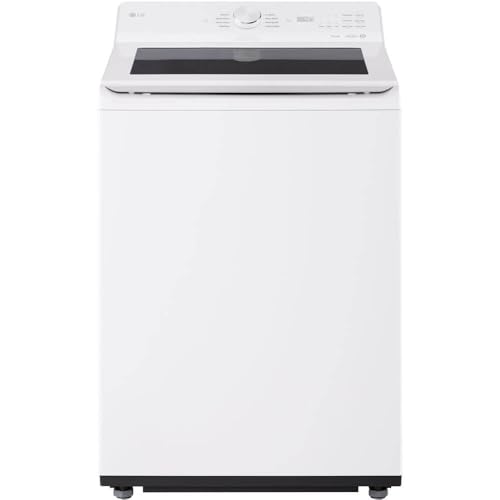
- Great tools at a great price
Pros
- 4.8-cubic-foot capacity suits everyday family loads
- 4-Way Agitator provides defined mechanical wash action
- EasyUnload design improves access to the basket
- AI Sensing and ThinQ add automated and connected features
Cons
- Agitator occupies space in the center of the basket
- Smart features may be unnecessary for basic laundry routines
Who should buy it: Households that prefer an agitator top-loader but want modern sensing, app connectivity, and easier basket access.
4. Speed Queen TC5003WN — Best for Traditional Wash Action
The Speed Queen TC5003WN is a 3.2-cubic-foot top-loader with six wash cycles, an agitator, a stainless-steel wash tub, automatic balancing, and the company’s Classic Clean wash action. It also avoids a locking lid, allowing forgotten items to be added after a cycle begins. Its controls and wash approach are comparatively straightforward, but the smaller basket holds less than today’s large-capacity models and its more assertive agitation may not suit wardrobes dominated by delicate fabrics.
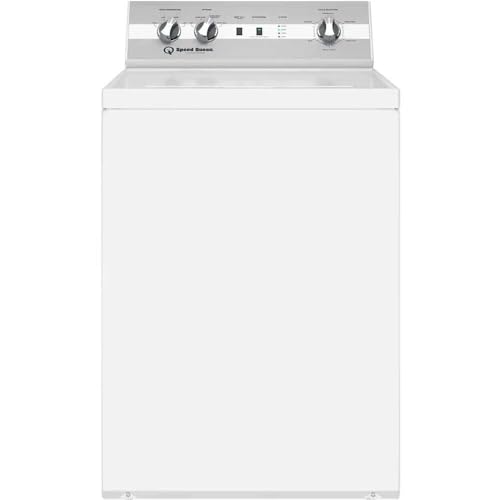
- Width: 25.625" x Height: 42.75" x Depth: 28"
- Type: Top Load - Capacity: 3.2 cu. ft.
- Agitator: Yes - Wash Cycles: 6
Pros
- Traditional agitator design provides active wash movement
- Simple six-cycle selection avoids excessive menu complexity
- No lid lock makes adding forgotten items easier
- Stainless-steel wash tub resists chips and corrosion
Cons
- 3.2-cubic-foot capacity is modest by current standards
- Traditional wash action may be less suitable for frequent delicate loads
Who should buy it: Buyers who prioritize straightforward controls, traditional agitation, and a smaller, uncomplicated top-loader.
5. GE Profile PTW605BSRWS — Best Balanced Top-Load Washer
The GE Profile PTW605BSRWS is a 4.9-cubic-foot ENERGY STAR-certified top-loader with Smarter Wash Technology and FlexDispense. Its capacity is suitable for family laundry, while the dispensing system is designed to accommodate different detergent formats. This model offers an approachable middle ground between simple traditional top-loaders and the largest feature-heavy machines, although its technology and control options may be more than a minimalist user needs.
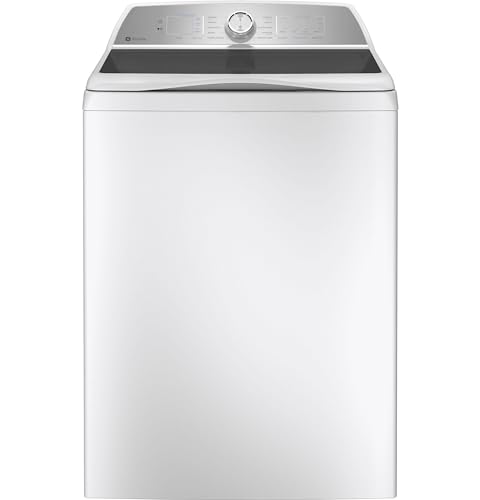
- Wi-Fi Connection
- Deep Fill
- Connects With Amazon Alexa
Pros
- 4.9-cubic-foot capacity handles sizable everyday loads
- Smarter Wash Technology adjusts the wash process
- FlexDispense supports multiple detergent types
- Top-loading design avoids a front door seal
Cons
- Cannot be stacked with a matching dryer
- Additional wash settings require some familiarization
Who should buy it: Families wanting a roomy, modern top-loader without moving to the largest or most specialized models.
6. Auertech 35 lb Fully Automatic Portable Washer — Best for Apartments
The Auertech is a fully automatic portable washer with a manufacturer-listed 35-pound capacity, LED controls, 12 wash cycles, eight water levels, a drain pump, and a spin-dry function. It provides more automation than a manual twin-tub washer and is intended for apartments and other spaces where a conventional full-size installation is impractical. Its spin function removes water but does not heat-dry clothing, and its usable load size and connection requirements differ from those of a standard permanent washer.
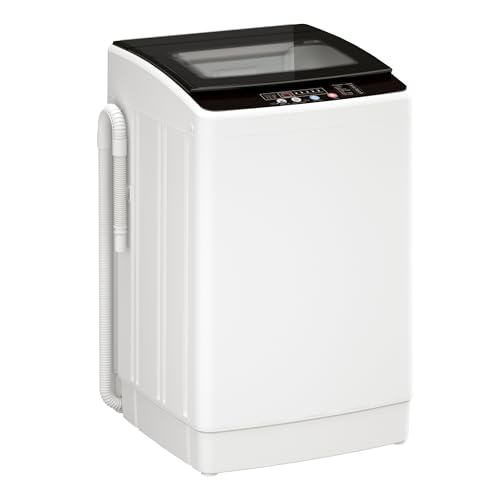
- 35 lbs Large Capacity for Family-Size: Designed for real household laundry, this large capacity...
- 12 Wash Cycles & 8 Water Levels: Choose from Normal, Bulky, Standard, 26 Min Quick Wash, Soft, Baby...
- Powerful 420W Motor: The high-performance 420W motor with a 1600 RPM spin speed delivers powerful...
Pros
- Fully automatic operation reduces manual transferring
- Twelve cycles provide flexibility for different loads
- Eight water levels help match water use to load size
- Built-in drain pump supports portable installation
Cons
- Spin-dry function does not fully dry clothing
- Less suitable than a full-size washer for bulky bedding
Who should buy it: Apartment residents and renters who need an automated portable washer rather than a permanently installed full-size machine.
Quick Comparison
- Best overall: Kenmore 4.5 cu. ft. Front-Load Washer
- Best for odor control: GE GFW550SSNWW
- Best smart agitator top-loader: LG 4.8 cu. ft. Smart Top-Load Washer
- Best traditional washer: Speed Queen TC5003WN
- Best balanced top-loader: GE Profile PTW605BSRWS
- Best portable washer: Auertech 35 lb Fully Automatic Portable Washer
Buying Guide
Front-Load or Top-Load?
Front-loaders generally provide strong efficiency and moisture extraction, while top-loaders offer upright loading and eliminate the front-door gasket routine. ENERGY STAR notes that certified front-loaders use less energy and water than traditional agitator top-loaders, but the most practical choice still depends on space, mobility, maintenance preferences, and typical load types.
Do Not Judge a Washer Only by RPM
A higher spin speed can reduce the moisture remaining in clothing, potentially shortening dryer or line-drying time. It does not automatically mean the washer cleans better, and maximum speed may not be appropriate for delicate fabrics, unbalanced loads, or every cycle.
Choose Capacity for Your Normal Loads
Larger baskets help with bedding and high-volume family laundry, but they also increase the machine’s footprint and may encourage overloading. Compare capacity with the clothing and linens you wash weekly rather than choosing the largest available number. ENERGY STAR also recommends considering physical dimensions and drum capacity together.
Agitator or Impeller?
An agitator occupies the center of the basket and provides defined mechanical movement through the load. An impeller leaves more open basket space and moves clothing using a lower-profile wash plate. Neither system is automatically best: agitators appeal to buyers who prefer traditional action, while impellers provide more unobstructed room for bulky items.
Measure the Entire Installation Path
Check machine width, height, depth, hoses, door or lid clearance, and the route through hallways and doorways. A front-loader may need substantial clearance with its door fully open, while a top-loader requires vertical space above the lid.
Consider Maintenance Before Buying
All washing machines require cleaning, correct detergent dosing, and balanced loading. Front-load owners should pay particular attention to the door seal, detergent drawer, drum, and pump filter, while top-load baskets also benefit from scheduled cleaning to control residue and odor.
Account for Floor Stability
An uneven machine or flexible floor can amplify movement during the spin cycle. The washer should be correctly leveled, shipping hardware must be removed where applicable, and heavy items should be distributed rather than concentrated on one side of the basket.
Understand Portable Washer Limitations
Portable washers are useful where permanent hookups are unavailable, but they require suitable water supply and drainage arrangements. Their capacity claims are not directly comparable with full-size cubic-foot ratings, and a built-in spinner removes water rather than replacing a heated tumble dryer.
Compare Efficiency Labels
Use the yellow EnergyGuide label to compare estimated energy use among similarly sized machines. ENERGY STAR certification provides an additional efficiency benchmark, while Integrated Water Factor indicates how much water a washer uses relative to its capacity.
Frequently Asked Questions
What Type of Washer Is the Safest Choice for Most Homes?
A mid-capacity front-loader is a strong general choice for households prioritizing efficiency and moisture extraction, provided the owner is willing to maintain the door seal, dispenser, and basket. Buyers who strongly prefer upright loading may be happier with a modern top-loader.
Does a Faster Spin Cycle Reduce Dryer Time?
It can. A higher spin setting extracts more water when the fabric and load permit it, leaving less moisture for the dryer or clothesline to remove. Use lower settings when recommended for delicate or easily wrinkled items.
How Much Washer Capacity Does a Family Need?
Many households are well served by a washer in the mid-to-large capacity range. Bigger baskets become more useful for frequent bedding, towels, or high-volume family loads, but external dimensions and laundry-room clearance remain just as important as tub capacity.
How Do I Limit Front-Load Washer Odors?
Use the recommended type and quantity of detergent, remove wet laundry promptly, clean the gasket and dispenser, and run the manufacturer’s cleaning cycle on schedule. Models with moisture-management systems still require routine cleaning.
Is an Agitator Better for Cleaning?
An agitator provides active mechanical movement and may appeal to users accustomed to traditional top-load washing. Cleaning also depends on detergent, temperature, cycle design, load size, fabric type, and whether the machine has been overloaded.
Can a Portable Washer Replace a Full-Size Machine?
A larger fully automatic portable washer can handle routine clothing for one or two people, but it is less practical for comforters, large family loads, and continuous heavy use. It is best treated as a small-space solution rather than a direct equivalent to a permanently installed full-size washer.
Should I Buy a Smart Washing Machine?
Connected features can provide cycle notifications, remote monitoring, and downloadable settings, but they do not replace appropriate loading, detergent dosing, or maintenance. Buyers who use only a few basic cycles may gain little from paying for extensive app functionality.
Final Verdict
The Kenmore 4.5 cu. ft. Front-Load Washer is the strongest all-around choice for most households because it combines practical capacity, steam treatment, accelerated cycles, and an efficient front-load format. The GE GFW550SSNWW is the better front-loader for buyers especially concerned about residual moisture and odor control.
For top-load buyers, the LG 4.8 cu. ft. Smart Top-Load Washer offers modern sensing and an agitator, while the Speed Queen TC5003WN favors simpler controls and traditional wash action. The GE Profile PTW605BSRWS provides a balanced family-friendly alternative with a larger basket and modern dispensing features. For apartments without conventional washer hookups, the Auertech 35 lb Portable Washer fills a useful specialist role.
As an Amazon Associate, I earn from qualifying purchases.