Best Budget Drone for Smooth Video
As an Amazon Associate, I earn from qualifying purchases. Some links may earn us a commission at no extra cost to you.
A “budget drone” can still be a great drone if you focus on the right stuff: stable flight, a camera that isn’t shaky, and enough battery life actually to practice. I prioritize max flight time (minutes) as the main value metric because it’s what most beginners feel instantly.
Top picks
1) DJI Mini 4K — Best for the best video on a budget
If you care most about smooth footage, a true 3-axis gimbal is the biggest upgrade you can get in a lower-priced drone. This is the pick I’d start with for travel clips, family trips, and “I want it to look good without editing.”
Why it wins: Gimbal stabilization beats EIS-only drones for smooth video.

- No Registration Needed - Under 249 g, this drone with camera for adults 4K does not require FAA registration or Remote ID for recreational use. Visit...
- 4K Ultra HD & 3-Axis Gimbal for Cinematic Quality Shooting - Capture stunning moments in any light—sunrises, sunsets, and night scenes with...
- 38kph (Level 5) Wind Resistant - This drone for adults has a stable flight even in Level 5 winds. Brushless motors enhance power and allow takeoff at...
- Due to platform compatibility issue, the DJI Fly app has been removed from Google Play. To ensure a better product usage experience, please log in to...
What I like
-
Smooth video thanks to a real gimbal
-
Easy, confidence-building flight stability
-
Great “first serious drone” path without overspending
What to watch
-
No obstacle avoidance (you still need to fly carefully)
-
Not the best choice for indoor learning
-
Accessories can add cost over time
Who should skip: If you want obstacle sensors or automatic tracking on a strict budget.
Scores: Performance 5/5 • Flight time 4/5 • Ease of use 5/5 • Value 4/5
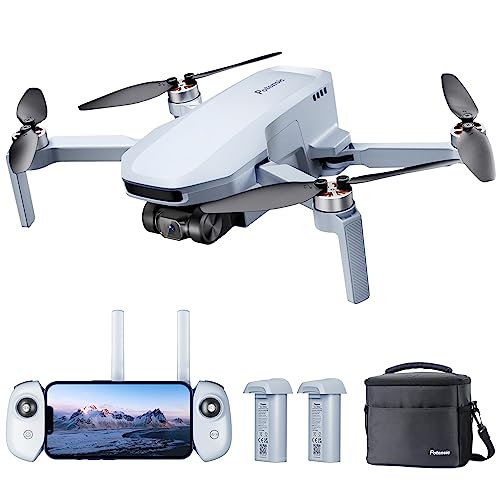
2) Potensic ATOM SE — Best non-DJI value for GPS beginners
This is the value pick when you want “real drone” features (especially GPS + return-to-home) but don’t want to pay for the most famous brand.
Why it wins: strong feature set for the money.
- ...
- 【𝟒𝐊 𝐄𝐈𝐒 𝐂𝐚𝐦𝐞𝐫𝐚 𝐰𝐢𝐭𝐡 𝐒𝐨𝐧𝐲 𝐒𝐞𝐧𝐬𝐨𝐫】The drone is equippied with a...
- 【𝐄𝐚𝐬𝐲 𝐭𝐨 𝐔𝐬𝐞, 𝐒𝐮𝐫𝐠𝐞𝐅𝐥𝐲 𝐅𝐥𝐞𝐱𝐢𝐛𝐥𝐞 𝐂𝐨𝐧𝐭𝐫𝐨𝐥】SurgeFly...
- 【𝟔𝟐 𝐌𝐢𝐧𝐮𝐭𝐞𝐬 𝐅𝐥𝐢𝐠𝐡𝐭, 𝟐 𝐁𝐚𝐭𝐭𝐞𝐫𝐢𝐞𝐬】The ATOM SE 4K drone comes with...
What I like
-
GPS features make outdoor practice easier
-
Portable and beginner-friendly for the category
-
Usually, a better deal than most random off-brand drones
What to watch
-
EIS can still look shaky in the wind
-
App experience can be less polished
-
The stated range varies a lot depending on where you fly
Who should skip: If your main goal is smooth cinematic footage—go gimbal first.
Scores: Performance 4/5 • Flight time 4/5 • Ease of use 4/5 • Value 5/5
3) Holy Stone HS720E — Best for longer total flight time per outing
If you hate stopping every few minutes, look for bundles that include extra batteries. This model often wins on total time flying when it includes two batteries.
Why it wins: more total flight time without buying extras immediately.
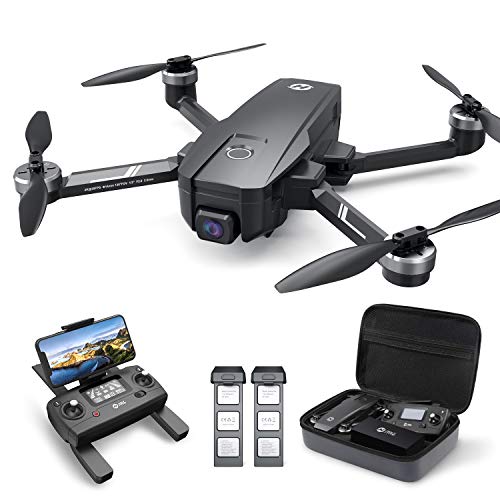
- [FAA-Compliant] The Holy Stone HS720E drone with camera 4K has completed the FAA requirement. You can now obtain the Holy Stone...
- 4K EIS Anti-Shake Camera with Sony Sensor: HS720E GPS drone boasts a cutting-edge 4K(3840 x 2160) camera with Electric Image Stabilization (EIS...
- Seamless Outdoor Flight: Experience stable flight, thanks to the integrated air optical flow & air pressure altitude control system. With GPS location...
- Extended Flight Time: Elevate your airborne adventures with our Fly More Kit, providing a total flight time of 46 minutes with two intelligent...
What I like
-
Great for practice sessions (especially with two batteries)
-
GPS features reduce “lost drone” anxiety
-
A bigger drone can be easier to see outdoors
What to watch
-
Bigger/heavier than mini travel drones
-
EIS video won’t look as smooth as a gimbal
-
Takes up more bag space
Who should skip: If you want a small, under-250g travel-style drone.
Scores: Performance 3/5 • Flight time 5/5 • Ease of use 4/5 • Value 4/5
4) Ryze Tello — Best for kids and indoor learning
This is the “learn the sticks” drone. It’s not for cinematic filming—it’s for building skill, confidence, and muscle memory inside (or outdoors in very calm conditions).
Why it wins: easiest and least intimidating way to learn.

- EXTREMELY LIGHTWEIGHT: This small drone fits in the palm of your hand and weighs only 80 g. Its robust design combined with DJI Flight technologies...
- PERFORM FLYING STUNTS: You can also perform eight different somersaults by moving your finger on the screen and letting it fly up and down from your...
- 13 MIN FLIGHT TIME: The high-performance battery from Tello offers an impressively long flight time, making it one of the longest flight times in the...
- PROGRAMMABLE: You can learn the basics of programming while having fun. By using Scratch, a coding system developed by MIT, you can program your own...
What I like
-
Great for beginners learning controls
-
Small and more forgiving around furniture
-
Fun for quick sessions, not a whole “setup.”
What to watch
-
Not a true outdoor filming drone
-
No GPS hover (wind can push it)
-
Shorter battery life compared with camera drones
Who should skip: If you want stable outdoor 4K footage.
Scores: Performance 2/5 • Flight time 2/5 • Ease of use 5/5 • Value 4/5
5) BETAFPV Cetus FPV Kit — Best cheap way to try FPV
FPV is a different hobby lane: more immersive, more skill-based, more “game-like.” This kit is popular because it bundles the essentials so you can try FPV without piecing everything together.
Why it wins: the simplest low-cost entry into FPV.

- Cetus FPV Kit: BETAFPV Cetus FPV kit is prepared for the FPV starter. It comes with a special design of Cetus Brushed Whoop Quadcopter, LiteRadio 2 SE...
- FPV Simulator Supported: Cetus FPV Kit comes with a LiteRadio 2 SE. Radio Transmitter which can learn and practice flying a quadcopter through an FPV...
- VR02 FPV Goggles: Cetus FPV Kit includes a VR02 FPV goggles and the quadcopter has a built-in VTX and camera, allowing users to fly quadcopter with a...
- Height hold function: height hold function allows Cetus quadcopter hover. The quadcopter can stay at a current height when the pilot's hands are away...
What I like
-
All-in-one starter kit (drone + controller + goggles)
-
A small drone is more forgiving of bumps
-
Great for learning FPV basics at home
What to watch
-
Short flights per battery (normal for tiny FPV drones)
-
Video quality is “flyable,” not cinematic
-
Learning curve is real (expect early crashes)
Social proof: See reviews on Amazon.
Who should skip: If you mainly want stable outdoor video for trips.
Scores: Performance 3/5 • Flight time 1/5 • Ease of use 3/5 • Value 4/5
Quick compare
-
Best overall budget video: DJI Mini 4K
-
Best non-DJI value: Potensic ATOM SE
-
Best for long practice sessions: Holy Stone HS720E (especially 2-battery bundles)
-
Best indoor learner: Ryze Tello
-
Best budget FPV kit: BETAFPV Cetus FPV Kit
Buying guide
Step 1: Decide your main goal
I want a smooth outdoor video
Pick a gimbal drone first. It’s the biggest “looks expensive” upgrade.
I want stress-free outdoor flying
Prioritize GPS + return-to-home so you can recover safely if you get disoriented.
I want to practice a lot
Prioritize total flight time (minutes) and bundles with extra batteries.
I want something for indoors / kids
Go small and simple. You’ll learn faster and worry less.
Step 2: Don’t get tricked by “4K” alone
4K doesn’t automatically mean good footage. Wind + vibration can ruin video without strong stabilization.
Step 3: Avoid the sketchy budget traps
-
“Too-good-to-be-true” range claims
-
Unclear battery availability (hard to replace later)
-
No real return-to-home features for outdoor flying
-
Confusing variants (different cameras/batteries under one name)
FAQs
What’s the best budget drone for beginners overall?
If you want the smoothest results with the least frustration, I’d start with a gimbal-based mini drone. If you’re optimizing pure value, a GPS beginner drone can be the smarter spend.
Is FPV a good first drone?
Only if you want the FPV experience specifically. For most first-time flyers, a GPS camera drone is easier and less crash-prone.
What’s the #1 spec I should care about on a budget?
For most beginners: flight time (minutes). More time in the air = faster learning and less frustration.
As an Amazon Associate, I earn from qualifying purchases.