Best 4-Person Tents for Camping
As an Amazon Associate, I earn from qualifying purchases. Some links may earn us a commission at no extra cost to you.
A four-person tent can sleep four campers closely, but this size is often more comfortable for two adults with gear, a couple with children, or three campers who want extra room. Floor space, peak height, entrances, rain protection, vestibules, and setup style matter more than the capacity label alone.
Top Picks
ALPS Mountaineering Lynx 4 — Best Overall
The Lynx 4 offers a strong balance of weather protection, ventilation, storage, and manageable weight. Its freestanding two-pole design uses aluminum poles, two doors, two vestibules, and factory-sealed fly and floor seams.
The 64-square-foot interior gives a small group useful sleeping space, while the vestibules keep packs and footwear outside the main sleeping area.
Why it wins: It combines two-door convenience, covered storage, aluminum poles, and a proper three-season layout without becoming an oversized family cabin tent.
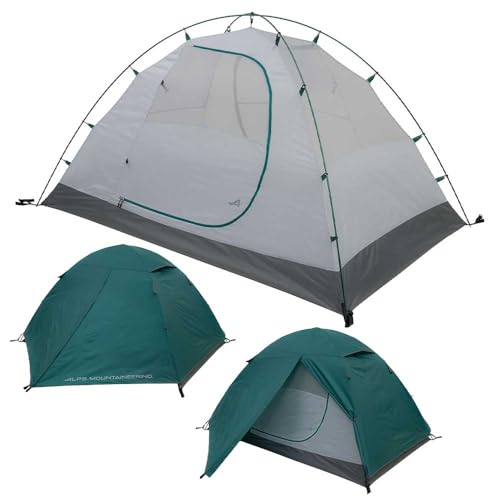
- EASY SET-UP - There's no assembly frustration with our Lynx Tent series; this free-standing...
- WEATHER PROTECTION - 75D 185T polyester fly with 1500 mm coating resists UV damage and stays taut...
- SPACIOUS - Two doors for easy entry from either side, and two vestibules that provide ample storage...
Pros
- Aluminum poles
- Two doors
- Two vestibules
- Factory-sealed fly and floor seams
- Good ventilation
Cons
- Heavy for solo backpacking
- Limited standing room
Trade-offs / Who should skip:
Choose a cabin-style tent if standing height matters more than portability. The Lynx is strongest for campers who want a more traditional weather-ready tent.
LOYEAHCAMP Blackout 4/6-Person Tent — Best for Family Camping
The LOYEAHCAMP is a double-layer family dome tent with a rainfly and blackout design. That makes it particularly appealing for campgrounds where early sunrise or bright neighboring campsites can disturb sleep.
Its family-oriented layout also gives this pick a different role from the more technical ALPS and OneTigris shelters.
Why it wins: The blackout design and double-layer construction make it especially useful for families prioritizing sleeping comfort at established campgrounds.
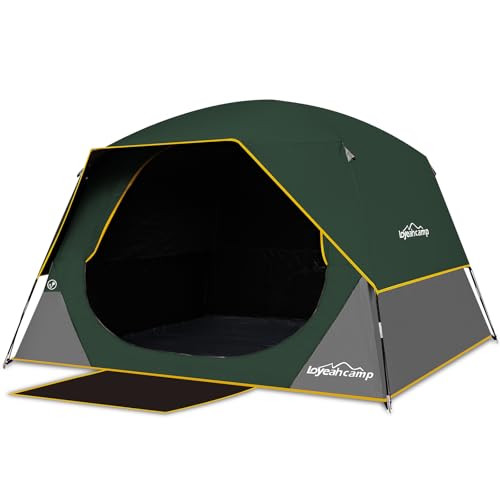
- Dark Tent: The blackout camping tent is perfect for sleeping in and allows you to have privacy on...
- More Headroom: Loyeahcamp dome tent designed with 20% more headroom than traditional dome tents...
- Visibility and Ventilation: This large camping tent designed with quality mesh for top roof, door...
Pros
- Blackout design
- Double-layer construction
- Rainfly included
- Family-focused dome format
- Portable design
Cons
- Not the lightest option for carrying long distances
- Less specialized for severe conditions than technical shelters
Trade-offs / Who should skip:
Choose the ALPS or OneTigris if weather-focused construction and technical camping matter more than campground comfort. LOYEAHCAMP is primarily a family-camping choice.
Coleman Sundome 4-Person Tent — Best Budget Option
The Coleman Sundome remains a straightforward entry-level tent for recreational campground use. Its 9-by-7-foot floor can fit a queen air mattress, while two windows and a ground vent support airflow.
Coleman’s WeatherTec construction includes features intended to address common rain-entry points, and the conventional pole setup remains approachable for beginners.
Why it wins: It delivers useful four-person campground space and familiar construction at an accessible price.
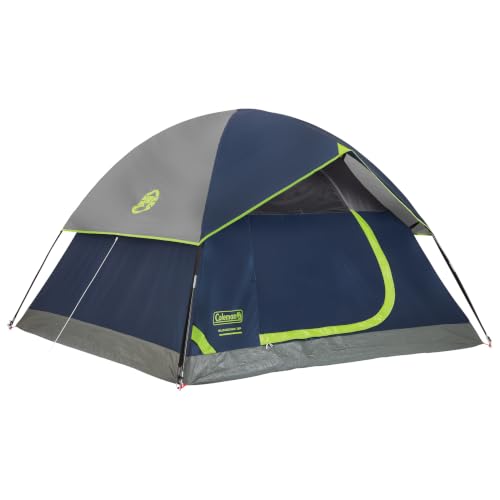
- Weather Protection You Can Trust: Stay dry and comfortable with the WeatherTec system’s welded...
- Quick & Easy Setup: Spend more time outdoors and less time pitching your tent. Snag-free, continuous...
- Built for Comfort & Ventilation: Large windows and a ground vent provide superior airflow and reduce...

Pros
- Accessible price
- Fits a queen air mattress
- Windows and ground vent
- Straightforward setup
- Rainfly included
Cons
- Partial rainfly
- Limited standing height
Trade-offs / Who should skip:
Choose a full-fly tent if extended wet-weather camping is common. The Sundome works best for occasional trips in relatively mild conditions.
OneTigris JOVIAN 4-Person Tent — Best Premium Weather-Ready Pick
The JOVIAN is a four-person, three-season shelter designed for family camping and outdoor trips. Its campaign listing specifies a 2000mm outer rainfly, a 5000mm-rated bottom, and a waterproof floor mat.
That gives it a more weather-focused profile than the simpler recreational family tents in this lineup.
Why it wins: The combination of a three-season design and clearly specified rainfly and floor water-resistance ratings makes it the strongest premium weather-oriented replacement.

- Waterproof 4 Person Tent: 210T taffeta outer tent with 2000mm waterproofing and 210D Oxford fabric...
- Fits 4 Campers: Measures 6.8ft*7.8ft*4.9ft (2.1m*2.4m*1.5m) to sleep up to 4 campers or to fit...
- Quick And Easy Setup: Sets up in minutes with a user-friendly dome design, flexible poles, stakes...
Pros
- Four-person three-season design
- 2000mm outer rainfly
- 5000mm bottom
- Waterproof floor mat
- Easy-setup positioning
Cons
- Premium price
- More tent than casual fair-weather campers may need
Trade-offs / Who should skip:
Choose the Sundome or LOYEAHCAMP if most trips are occasional summer campground stays. The JOVIAN makes more sense for campers who place greater emphasis on weather protection.
UNP 4-Person Cabin Tent — Best for Standing Room
The UNP prioritizes interior comfort with an 8-by-7-foot floor and 72-inch peak height. Its straighter cabin walls create more usable space near the edges than a low dome, which helps when changing clothes or organizing bedding.
The tent also incorporates mesh openings for ventilation and is positioned for a relatively quick conventional setup.
Why it wins: Its tall cabin profile provides substantially more usable vertical space than the lower dome tents here.

- Roomy 4-PersonTent: Spacious design offers enough room for 4 people, with a size 8' x 7' x 72"(H...
- 3 Minutes Set-Up for 2 Person: No particular skills are needed, one person also could set up the...
- Breathable Mesh Windows: This tent has 1 mesh door, 2 mesh windows & mesh tent top, which allows the...
Pros
- 72-inch peak height
- Straighter cabin walls
- 8-by-7-foot floor
- Mesh ventilation
- Family-friendly interior
Cons
- Taller profile catches more wind
- Best suited to car camping
Trade-offs / Who should skip:
Choose a lower dome if wind resistance or smaller packed size matters more than headroom. The UNP is for campground comfort.
Night Cat Pop-up Camping Tent — Best Instant Setup
The Night Cat is designed as a waterproof instant family tent for two to four people. Its pop-up format minimizes the amount of pole assembly required at camp, making it particularly useful for quick weekend trips, festivals, and late arrivals.
Why it wins: It offers one of the simplest setup formats in the lineup while still being sized for small families or couples who want extra room.
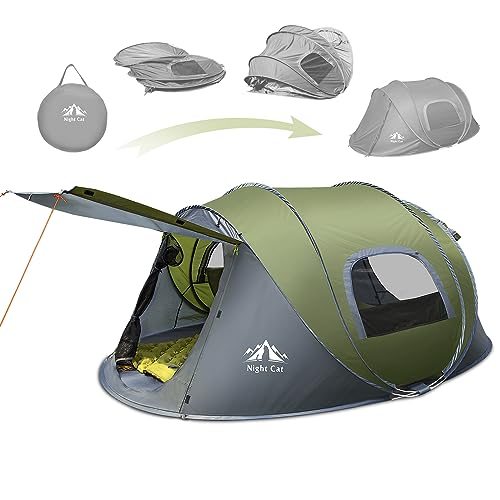
- 【Upgraded Pop up Tent, Easier Fold Back】Throw the tent to the ground, and spread the pole then...
- 【Package 40% Smaller】Weight:3kg, Package size:28x28x2.8in. Tranditional popup tent fold in...
- 【Spacious tent,For 2-4 persons】Inner size: 9.5x6.6x4 ft, fits well with king & queen mattress...
Pros
- Instant pop-up design
- Sized for two to four people
- Waterproof positioning
- Family-friendly format
- Good for quick campground setup
Cons
- Pop-up frames generally pack bulkier than conventional poles
- Less appealing when minimum packed size matters
Trade-offs / Who should skip:
Choose the ALPS or OneTigris if compact packing and traditional serviceable poles matter more than setup speed. Night Cat is best for convenience-first camping.
KAZOO Uranus 4-Person Tent — Best for Covered Porch Storage
The KAZOO combines a double-layer sleeping area with a covered front porch. That gives campers a defined place for shoes, packs, or wet outer layers without filling the main sleeping compartment.
Two doors and windows also support access and ventilation during longer campground stays.
Why it wins: The covered porch adds practical sheltered storage that most standard four-person domes lack.
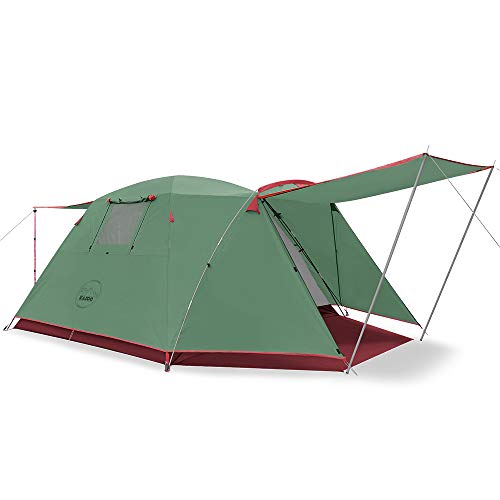
- ✔KAZOO outdoor camping tent provides spacious and waterproof tent with enough features. Setup was...
- ✔KAZOO outdoor camping tent consists of 2 functional layers. The liner is made of B3 mesh and 190T...
- ✔KAZOO outdoor camping tent offer 2 doors and 2 windows to provide excellent ventilation. We...
Pros
- Covered front porch
- Double-layer design
- Two doors
- Two windows
- Useful exterior gear space
Cons
- Porch adds setup complexity
- Requires a larger campsite footprint
Trade-offs / Who should skip:
Choose a simpler dome if you mostly take short overnight trips. The KAZOO is more useful when you want a separate sheltered gear area.
OneTigris ORBITIS Hot Tent — Best Cold-Weather Specialist
The ORBITIS is a specialist four-season hot tent rather than a conventional family campground tent. It includes a built-in stove jack, four entrances, front and rear vestibule areas, a detachable footprint, and aluminum poles.
It is intended for experienced campers who specifically want a stove-compatible base-camp shelter.
Why it wins: None of the conventional family tents here offers the same dedicated hot-tent functionality.
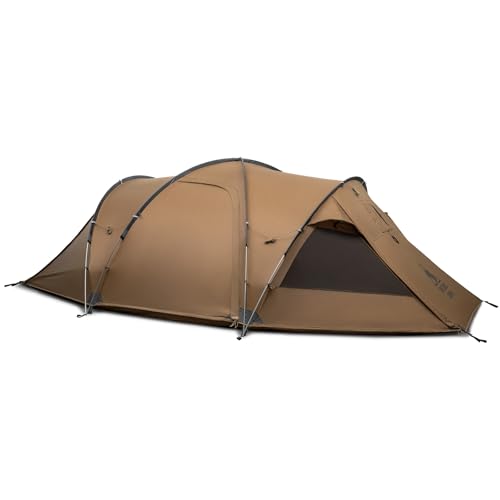
- ★ 4 𝙎𝙚𝙖𝙨𝙤𝙣 𝙏𝙚𝙣𝙩: A hot tent with stove jack to use with tent stove...
- ★ 𝙎𝙥𝙖𝙘𝙞𝙤𝙪𝙨 𝙄𝙣𝙩𝙚𝙧𝙞𝙤𝙧: Dimensions in 13.9ft (L) *8ft...
- ★ 𝙌𝙪𝙖𝙡𝙞𝙩𝙮 𝘽𝙪𝙞𝙡𝙙: Made with rugged 40D Sil-Coated Nylon that is...
Pros
- Built-in stove jack
- Four entrances
- Aluminum poles
- Front and rear vestibule areas
- Four-season specialist design
Cons
- No inner mesh sleeping tent
- Stove use requires careful safety procedures
Trade-offs / Who should skip:
Skip this model for ordinary family campground use. Any tent-stove setup requires appropriate ventilation, clearances, carbon-monoxide precautions, and strict adherence to the stove and tent manufacturers’ instructions.
Quick Compare
- ALPS Mountaineering Lynx 4: best overall.
- LOYEAHCAMP Blackout: best for family camping.
- Coleman Sundome 4: best budget option.
- OneTigris JOVIAN: best premium weather-ready pick.
- UNP 4-Person Cabin: best for standing room.
- Night Cat Pop-up: best instant setup.
- KAZOO Uranus: best for covered porch storage.
- OneTigris ORBITIS: best cold-weather specialist.
Final Verdict
The ALPS Mountaineering Lynx 4 remains the strongest all-around four-person tent thanks to its aluminum poles, two doors, vestibules, and traditional three-season construction.
Families who value darker sleeping conditions should consider the LOYEAHCAMP Blackout, while the Coleman Sundome remains the value pick for occasional campground use. For a more weather-oriented setup, the OneTigris JOVIAN adds clearly specified rainfly and floor protection.
Choose the UNP Cabin Tent for standing room, Night Cat when instant setup is the priority, and the KAZOO Uranus for covered gear storage. The OneTigris ORBITIS remains the specialized choice for experienced campers who specifically need a stove-compatible shelter.
As an Amazon Associate, I earn from qualifying purchases.