5 Best Budget Drones — Real 4K Cameras Under $300 That Actually Fly Well
As an Amazon Associate I earn from qualifying purchases. Some links may earn us a commission at no extra cost to you.
DJI Mini 2 SE — Best Overall Budget Drone
The DJI Mini 2 SE weighs under 249g — below the FAA registration threshold — while delivering DJI’s proven OcuSync transmission technology, 10km video transmission range, and a 2.7K camera in DJI’s most accessible price point. Why it wins: DJI’s flight stability and transmission reliability are unmatched at any price point — the Mini 2 SE brings that same platform to under $300, making it the easiest recommendation for anyone who wants to fly without fighting the drone.

- 𝗟𝗶𝗴𝗵𝘁𝘄𝗲𝗶𝗴𝗵𝘁 𝗮𝗻𝗱 𝗣𝗼𝗿𝘁𝗮𝗯𝗹𝗲 - The drone is lightweight and compact, weighing...
- 𝗡𝗼 𝗥𝗲𝗴𝗶𝘀𝘁𝗿𝗮𝘁𝗶𝗼𝗻 𝗡𝗲𝗲𝗱𝗲𝗱 - Under 249 g, FAA Registration and Remote ID are not required if...
- 𝗘𝘅𝘁𝗲𝗻𝗱𝗲𝗱 𝗙𝗹𝗶𝗴𝗵𝘁 𝗧𝗶𝗺𝗲 - Enjoy longer flights with DJI Mini 2 SE, which offers a 31-min max flight...
- 𝗝𝘂𝘀𝘁 𝗮 𝗙𝗲𝘄 𝗧𝗮𝗽𝘀 𝗳𝗼𝗿 𝗘𝗽𝗶𝗰 𝗜𝗺𝗮𝗴𝗶𝗻𝗴 - The DJI Fly app has easy-to-use...
Pros
- Under 249g — no FAA registration or Remote ID module required, simplifying legal operation
- DJI OcuSync 2.0 delivers 10km transmission range with stable, reliable video feed in most environments
- Automatic Return to Home, GPS hover, and DJI’s flight assist make it beginner-friendly without limiting capability
Cons
- 2.7K camera rather than true 4K — acceptable quality but not the top camera on this list
- No obstacle avoidance sensors — pilot must manually avoid obstacles during flight
See rating & reviews on Amazon.
Trade-offs / Who should skip
Buyers who specifically need true 4K footage should consider the DJI Mini 3 instead. The Mini 2 SE is the right choice when DJI’s flight reliability and ecosystem matter more than camera resolution — it’s the most dependable drone on this list for new pilots.
Scores: Flight Stability 5/5 | Camera Quality 4/5 | Battery Life 4.5/5 | Value 5/5
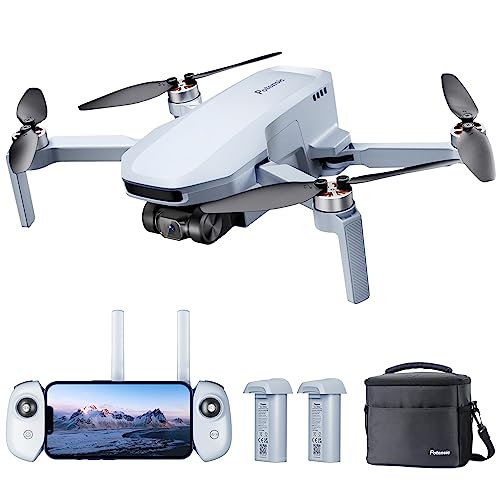
Potensic ATOM SE — Best Sub-249g Budget Drone
The Potensic ATOM SE delivers GPS-stabilized flight, a 4K EIS camera with a Sony sensor, and 62 minutes of total flight time across two batteries — all while weighing under 249g for FAA-free operation. Why it wins: The ATOM SE’s 4K Sony sensor camera and ShakeVanish EIS produce the best camera quality available in the under-249g weight class at this price — outperforming the DJI Mini 2 SE’s 2.7K output in resolution while staying below the registration threshold.
- ...
- 【𝟒𝐊 𝐄𝐈𝐒 𝐂𝐚𝐦𝐞𝐫𝐚 𝐰𝐢𝐭𝐡 𝐒𝐨𝐧𝐲 𝐒𝐞𝐧𝐬𝐨𝐫】The drone is equippied with a...
- 【𝐄𝐚𝐬𝐲 𝐭𝐨 𝐔𝐬𝐞, 𝐒𝐮𝐫𝐠𝐞𝐅𝐥𝐲 𝐅𝐥𝐞𝐱𝐢𝐛𝐥𝐞 𝐂𝐨𝐧𝐭𝐫𝐨𝐥】SurgeFly...
- 【𝟔𝟐 𝐌𝐢𝐧𝐮𝐭𝐞𝐬 𝐅𝐥𝐢𝐠𝐡𝐭, 𝟐 𝐁𝐚𝐭𝐭𝐞𝐫𝐢𝐞𝐬】The ATOM SE 4K drone comes with...
Pros
- 4K Sony sensor camera with ShakeVanish EIS — best camera system in the sub-249g budget category
- 62-minute total flight time across two included batteries — longer than most competitors in this weight class
- 4KM FPV transmission range with real-time video feed via the Potensic app
Cons
- Potensic’s app and flight assistance software is less polished than DJI’s ecosystem
- Wind resistance limited compared to larger, heavier drones — struggles in winds above 22 mph
See rating & reviews on Amazon.
Trade-offs / Who should skip
Pilots who prioritize flight system reliability over camera specs should choose the DJI Mini 2 SE instead. The ATOM SE is the right choice when 4K camera quality is the top priority and the pilot is comfortable learning a non-DJI flight system.
Scores: Flight Stability 4/5 | Camera Quality 5/5 | Battery Life 4.5/5 | Value 4.5/5
Holy Stone HS720E — Best Non-DJI Budget Drone
The Holy Stone HS720E uses a 4K EIS camera with a Sony sensor, brushless motors, GPS auto-return, and 5GHz FPV transmission in a foldable design that includes FAA Remote ID compliance out of the box. Why it wins: Holy Stone has built more brand recognition than any other non-DJI drone manufacturer in the consumer space — the HS720E is the most accessible entry point for buyers who want a recognizable, well-supported brand without DJI’s premium pricing.
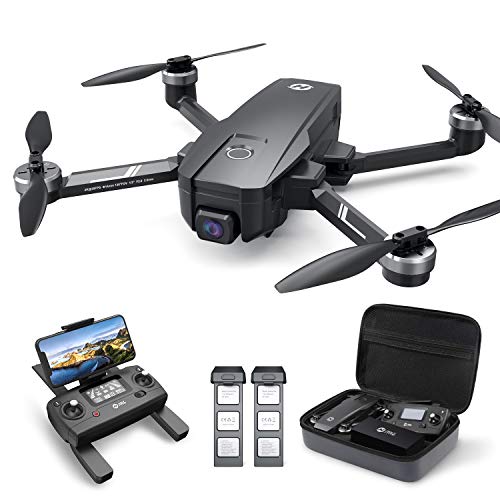
- [FAA-Compliant] The Holy Stone HS720E drone with camera 4K has completed the FAA requirement. You can now obtain the Holy Stone...
- 4K EIS Anti-Shake Camera with Sony Sensor: HS720E GPS drone boasts a cutting-edge 4K(3840 x 2160) camera with Electric Image Stabilization (EIS...
- Seamless Outdoor Flight: Experience stable flight, thanks to the integrated air optical flow & air pressure altitude control system. With GPS location...
- Extended Flight Time: Elevate your airborne adventures with our Fly More Kit, providing a total flight time of 46 minutes with two intelligent...
Pros
- FAA Remote ID compliant with the label located on the drone body — no separate module to purchase
- 4K Sony sensor with EIS at 30fps plus 1080P at 60fps for smooth action capture
- Brushless motor delivers quieter, more efficient operation and longer motor lifespan than brushed alternatives
Cons
- Requires FAA registration — at ~500g it exceeds the 249g threshold that exempts registration
- 5GHz FPV transmission range shorter than DJI’s OcuSync 2.0 in real-world use
See rating & reviews on Amazon.
Trade-offs / Who should skip
Buyers who want the sub-249g FAA exemption should choose the DJI Mini 2 SE or Potensic ATOM SE instead. The HS720E is the right choice for casual flyers who want Holy Stone’s brand and support infrastructure with better-than-average camera quality for the price.
Scores: Flight Stability 4/5 | Camera Quality 4/5 | Battery Life 4/5 | Value 4.5/5
Ruko F11GIM2 — Best Flight Time Budget Drone
The Ruko F11GIM2 includes a 2-axis gimbal with EIS stabilization, a 4K camera, level 6 wind resistance, and 96 minutes of total flight time across 3 batteries — delivering the longest cumulative flight time of any drone on this list at its price point. Why it wins: A mechanical 2-axis gimbal produces more consistently smooth aerial footage than EIS-only stabilization — the F11GIM2 is the only drone on this list at this price with a physical gimbal, which meaningfully improves video quality during windy or dynamic flights.
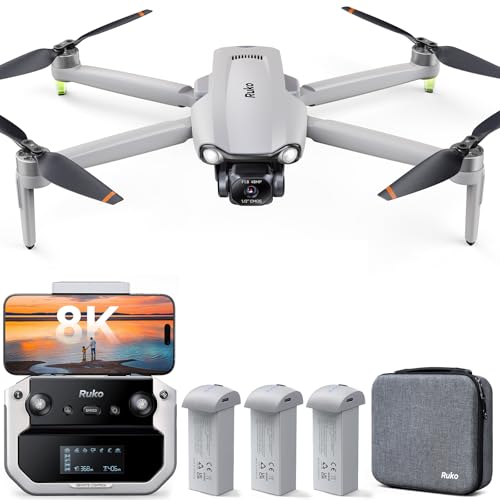
- 【111 Mins Long Flight Time】This drone comes with 3 batteries which provide a total of 111 minutes flight time (37 minutes per battery), supports...
- 【Gimbal+UHD Camera Drone】This drone captures clear photos and 4K/30fps videos, and features 5x zoom.
- 【Level 6 Wind Resistance】With built-in 1806 brushless motors and strong arms, this drone can resist the wind of level 6.
- 【Stable Real-time Transmission】The drone supports real-time flight data transmission up to 16,404 ft with its upgraded digital remote controller...
Pros
- 2-axis mechanical gimbal with EIS — physical stabilization that outperforms EIS-only systems during dynamic movement
- 3 batteries included providing 96 total minutes of flight time — the longest on this list
- Level 6 wind resistance handles stronger conditions than most budget drones can manage
Cons
- Weighs over 249g, requiring FAA registration and Remote ID compliance before flying
- Ruko’s app and flight automation features are less refined than DJI’s platform
See rating & reviews on Amazon.
Trade-offs / Who should skip
Pilots who want DJI-quality flight software or sub-249g weight class should choose differently. The Ruko F11GIM2 is the right choice when mechanical gimbal stabilization and maximum flight time per session are the priorities — it’s the best video quality budget drone for users willing to manage FAA registration.
Scores: Flight Stability 4/5 | Camera Quality 4.5/5 | Battery Life 5/5 | Value 4/5
DJI Mini 3 — Best Budget Drone for Image Quality
The DJI Mini 3 delivers a 3-axis mechanical gimbal, 4K/30fps HDR video, true vertical shooting for social media content, and up to 10km video transmission — all while weighing under 249g with DJI’s full flight safety platform. Why it wins: True Vertical Shooting mode captures portrait-orientation footage natively on the gimbal rather than cropping horizontal footage — a meaningful feature for creators who post Instagram Reels or TikTok content and the only budget drone that offers it.

- No Registration Needed - Under 249 g, FAA Registration, and Remote ID are not required if you fly for recreational purposes. Visit the FAA's official...
- 4K UHD Stunning Imagery- Film in 4K HDR Video for crystal clear aerial shots. With Dual Native ISO Fusion, Mini 3 enables the capture of details in...
- Striking Vertical Videos are Ready to Share - With True Vertical Shooting, you can easily capture tall landmarks like skyscrapers and waterfalls.
- Extended Battery Life - Its flight time can be extended up to 51 minutes with the Intelligent Flight Battery Plus (sold separately), but the aircraft...
Pros
- 3-axis mechanical gimbal with 4K HDR video — the most capable camera system in the sub-249g budget category
- True Vertical Shooting captures native portrait video without cropping horizontal footage
- Under 249g — no FAA registration required, plus DJI’s class-leading flight assistance and Return to Home
Cons
- Higher price than the other drones on this list — represents the ceiling of the budget category
- No obstacle avoidance sensors — relies entirely on pilot awareness for collision prevention
See rating & reviews on Amazon.
Trade-offs / Who should skip
Pilots who don’t need 4K HDR or vertical shooting and want the best value should choose the DJI Mini 2 SE instead. The DJI Mini 3 is the right choice when camera quality and social media content creation are the priorities and the higher price point is acceptable.
Scores: Flight Stability 5/5 | Camera Quality 5/5 | Battery Life 4/5 | Value 3.5/5
Quick Compare
- Best overall for new pilots: DJI Mini 2 SE
- Best sub-249g camera quality: Potensic ATOM SE
- Best non-DJI option: Holy Stone HS720E
- Best flight time with gimbal: Ruko F11GIM2
- Best image quality step-up: DJI Mini 3
FAQs
Do I need to register my drone with the FAA?
Drones weighing 250g or more require FAA registration ($5) and must carry Remote ID. Drones under 249g — including the DJI Mini 2 SE, Potensic ATOM SE, and DJI Mini 3 — are exempt from registration for recreational flying. Commercial operators must register regardless of weight. Check the FAA’s DroneZone website before flying anywhere.
What is the difference between EIS and a mechanical gimbal for video stabilization?
Electronic Image Stabilization (EIS) crops the video frame and uses software to compensate for camera shake — effective for mild vibration but degrades in strong wind or rapid movement. A mechanical gimbal physically stabilizes the camera on motors, producing smoother footage in dynamic conditions without cropping the frame. The Ruko F11GIM2 and DJI Mini 3 use mechanical gimbals; the others rely on EIS.
What does Remote ID mean for budget drone flyers?
FAA Remote ID requires drones over 250g to broadcast identification and location data during flight. Most newer drones include Remote ID hardware built in. If your drone predates the requirement and weighs over 250g, you may need a $25–50 add-on Remote ID module. Drones under 249g flying recreationally are currently exempt.
How long do budget drone batteries actually last?
Advertised flight times are measured under ideal conditions with no wind. In real-world flying — moderate wind, active maneuvering — expect 20–30% less than stated. The DJI Mini 2 SE lists 31-minute flight time; real-world users report 22–26 minutes per battery. Flying a second battery extends your session without replacing the drone, which is why battery count matters in the buying decision.
As an Amazon Associate, I earn from qualifying purchases.