Digital Cameras for Beginners
As an Amazon Associate, I earn from qualifying purchases. Some links may earn us a commission at no extra cost to you.
If you’re just getting started, the big wins are easy, reliable autofocus, a lens ecosystem you can grow into, and controls that don’t overwhelm you. Battery life and an EVF (electronic viewfinder) also matter once you move beyond phone shooting.
How I researched
I compared late-2025 camera roundups, deep dives, and lab tests, prioritized beginner-friendly autofocus and ergonomics, checked mount ecosystems (RF/RF-S, E-mount, Z-mount, X-mount) and lens availability, and noted warranty terms and any signs of discontinuation. I weighed image quality, AF tracking, battery ratings (CIPA), video capability, and ownership basics (size, menus, learning curve). This guide sticks to current US variants and links standard kits (no third-party bundles).
Top picks
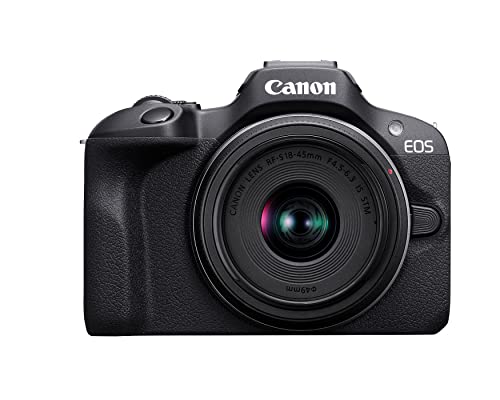
Canon EOS R50 — Best for most beginners
Canon’s easiest “real camera” jump-off: great AF, 4K, and a tiny body you’ll actually carry.
Why it wins: Canon’s Dual Pixel AF is super sticky, and the RF-S mount has solid starter lenses.

- High Image Quality: Canon EOS R50 4K digital camera features a 24.2 Megapixel CMOS (APS-C) sensor and DIGIC X processor for stunning image clarity and...
- High-Speed Continuous Shooting: Capture fast action with up to 12 fps with Electronic First Curtain shutter and up tp 15 fps with Electronic Shutter...
- Advanced Auto Focus: Dual Pixel CMOS AF II covers up to 100% x 100% area with 651 AF zones; features auto subject detection and tracking of people...
- Exceptional Low-Light Performance: Advanced A+ Assist offers an expanded array of auto-compatible scenes for greater expressive capability in auto...
Pros
-
Dual Pixel AF is beginner-friendly
-
Oversampled 4K/30 looks crisp
-
Light: very portable body
-
Guided modes help you learn
Cons
-
No in-body stabilization
-
EVF is good, not huge
Social proof
Reviewers consistently praise autofocus and ease of use; see rating & reviews on Amazon.
Trade-offs / Who should skip
If you want IBIS for low-light handheld video, look to Fujifilm X-T50 instead.
Scores: Performance 4.5/5 · Autofocus 4.5/5 · Ease of Use 5/5 · Value 4.5/5
Sony ZV-E10 II — Best for video-first creators
Purpose-built for creators with simple video tools, strong battery life, and Sony’s huge E-mount lens pool.
Why it wins: Upgraded sensor and long-lasting NP-FZ100 battery make it a stress-free hybrid for beginners.

- Exmor R CMOS sensor: The ZV-E10 II features Sony's most advanced sensor technology in an APS-C back-illuminated Exmor R CMOS image sensor with...
- Interchangeable lenses to capture your vision : From the G Master series, which blends breathtaking resolution with exquisite bokeh, to the G Lens...
- Create your look in camera: The Creative Look function makes it simple to create expressive moods for stills and movies in-camera, offering 10 presets...
- Precise subject tracking with Real-time Eye AF: Real-time Eye AF recognizes—with high precision—the faces and eyes of humans, as well as the eyes...
Pros
-
Reliable video autofocus
-
Long battery life for its class
-
Flip screen and creator shortcuts
-
Massive E-mount lens selection
Cons
-
No EVF; LCD-only framing
-
No in-body stabilization
Social proof
Creator reviews call it the easiest path to “YouTube-ready” footage; see rating & reviews on Amazon.
Trade-offs / Who should skip
If you want an EVF for bright-sun stills, consider Nikon Z50 II instead.
Scores: Performance 4.5/5 · Autofocus 4.5/5 · Ease of Use 4.5/5 · Value 4.5/5
Nikon Z50 II — Best for beginners who want an EVF and classic handling
A friendly body with a real viewfinder, solid stills, and approachable menus.
Why it wins: Adds faster bursts and modern subject detection while keeping Nikon’s comfy grip.

- Go Beyond Your Phone: Capture lifelike colors and incredible details from dawn to dusk thanks to a superior 20.9-megapixel DX format (APS-C size...
- Find Your Aesthetic: At the press of the Picture Control button, choose from 31 built-in presets designed to make your photos and videos stand out...
- Focus with Confidence: People, dogs, cats, birds and vehicles—the Z50II can automatically detect and accurately track nine distinct subjects. Plus...
- Powerful Video: Capture the scene with incredible quality and detail with 4K UHD/60p, in-camera 120p slow-motion in Full HD, built-in electronic VR...
Pros
-
Comfortable EVF for learning exposure
-
Subject-detect AF for people/animals
-
Good JPEG color out of camera
-
Z-mount has affordable DX zooms
Cons
-
No in-body stabilization
-
Battery rating is modest (CIPA)
Social proof
Owners highlight handling and color; see rating & reviews on Amazon.
Trade-offs / Who should skip
If handheld video is priority #1, Sony ZV-E10 II’s screen tools are friendlier.
Scores: Performance 4/5 · Autofocus 4/5 · Ease of Use 4.5/5 · Value 4/5
Fujifilm X-T50 — Best for beautiful JPEGs and “learn by dials”
A tactile, film-style body with Film Simulation dial and in-body stabilization that flatters handheld shooting.
Why it wins: The high-resolution sensor plus IBIS deliver sharp, color-rich results without heavy editing.

- Dedicated Film Simulation dial offering fast access to 20 Film Simulations (including REALA ACE mode)
- 40.2-megapixel X-Trans CMOS 5 HR sensor
- Supports all X Series lenses and includes a 1.4x and 2x Digital Teleconverter
- 6.2K/30P, 4K/60P, FHD/240P, 4:2:2 10-Bit Video
Pros
-
40MP-class detail with lovely Fuji color
-
5-axis IBIS steadies low-light shots
-
Film Sim dial encourages learning
-
Compact with EVF
Cons
-
Single card slot
-
Menus feel different to newcomers
Social proof
Reviewers praise its JPEGs and stabilization; see rating & reviews on Amazon.
Trade-offs / Who should skip
If you prefer deep video tools and creator features, Sony ZV-E10 II fits better.
Scores: Performance 4.5/5 · Autofocus 4/5 · Ease of Use 4/5 · Value 4/5
Canon EOS R100 — Best budget starter
The cheapest doorway into Canon RF with a straightforward feature set.
Why it wins: 24MP APS-C sensor, Canon color, and a tiny body for true beginners on a budget.
- Stellar Image Quality: Canon EOS R100 4K digital camera with 24.1 megapixel CMOS (APS-C) sensor for superb image clarity and detail can capture images...
- Compact Design: Compact, lightweight EOS R series 4K camera with an affordable price; smallest and lightest camera body in the EOS R series built for...
- Powerful Image Processor: DIGIC 8 image processor allows for improved shooting functionality and 4K video capability; EOS R100 is a great starting...
- High-Speed Shooting: Capture HD video at up to 120 frames per second, Full HD video at 60 fps, and 4K video at up to 24 fps — an excellent...
Pros
-
Very compact and light
-
Canon color with simple auto modes
-
Entry to RF/RF-S lenses
Cons
-
4K has notable limitations
-
AF and controls are basic
Social proof
Beginners like the size and simplicity; see rating & reviews on Amazon.
Trade-offs / Who should skip
If you’ll shoot a lot of video or moving subjects, step up to R50.
Scores: Performance 3.5/5 · Autofocus 3.5/5 · Ease of Use 4.5/5 · Value 4/5
Quick compare (table-free)
-
Canon EOS R50 — Best for most: sticky AF, crisp 4K/30, very light; no IBIS.
-
Sony ZV-E10 II — Best for video-first: creator UI, long battery, huge lens pool; no EVF.
-
Nikon Z50 II — Best handling + EVF: comfy grip, subject detect; modest battery rating, no IBIS.
-
Fujifilm X-T50 — Best JPEG color/learning by dials: high-res sensor + IBIS, Film Sims; single card slot.
-
Canon EOS R100 — Best budget: smallest RF starter; pared-back video/AF vs R50.
Buying guide
Decide by autofocus and viewfinder. If you’ll chase kids/pets, Canon’s Dual Pixel AF (R50) or Sony’s reliable AF (ZV-E10 II) make learning easy. Prefer an EVF for bright sun and exposure feedback? Pick Nikon Z50 II or Fujifilm X-T50.
Video priorities. If YouTube/TikTok is the goal, ZV-E10 II’s flip screen and creator-first controls are the easiest on-ramp. R50’s oversampled 4K/30 is great for general hybrid use; X-T50 adds IBIS to steady handheld clips.
Battery life. If you’ll shoot long days, ZV-E10 II’s NP-FZ100 battery is a standout among beginner bodies. Nikon Z50 II’s CIPA rating is lower; plan on a spare.
Lens ecosystem and growth.
-
Canon RF/RF-S: growing native RF-S zooms and primes; full-frame RF is there when you upgrade.
-
Sony E-mount: widest third-party support and many affordable primes/zooms.
-
Nikon Z: good starter DX zooms and solid roadmap; easy step-up to full-frame Z.
-
Fujifilm X: excellent small primes, great JPEG color workflow.
Warranty & safety. Most major brands offer a standard 1-year limited warranty in the US. UL/ETL safety listings aren’t typical for camera bodies; if that matters to you, check the product documentation before buying.
Fit/feel matters. If possible, try the grip and menu logic in person—small bodies (R50, R100) are super portable, while Z50 II and X-T50 feel more “camera-like” in hand.
As an Amazon Associate, I earn from qualifying purchases.